Advanced Techniques in Shower Screeding: A Complete Guide
Renovating your bathroom? If you’re tackling the shower area, shower screeding is a step you can’t skip. It creates a smooth, sloped base that directs water to the drain, preventing leaks and water damage. In Melbourne’s damp climate, where humidity can lead to mold issues, getting shower screeding right keeps your home dry and safe. This guide dives into advanced techniques for shower screeding, from prep work to finishing touches, with tips tailored to Aussie homes. Whether you’re a DIY enthusiast or hiring tilers, you’ll learn how to achieve a professional result that lasts.
What Is Shower Screeding and Why It Matters
Shower screeding involves applying a layer of mortar or a screed mix over the shower floor to form a gentle slope—usually 1-2%—toward the drain. This ensures water flows away efficiently, tying into waterproofing and tiling prep. Without proper shower screeding, water pools, leading to slips, rot, or costly fixes.
In bathroom home improvement, shower screeding connects to broader topics like membrane application, grout sealing, and ventilation. Latent issues include substrate stability in older Melbourne homes, where timber floors might shift. Related keywords like wet area prep, floor leveling, and anti-slip surfaces often come up, as Aussies prioritize durable, low-maintenance bathrooms.
For example, in coastal suburbs like St Kilda, salt air accelerates corrosion, so robust shower screeding protects subfloors. Culturally, with our love for long showers and spa-like retreats, a well-screeded base enhances relaxation without worries.
Shower Screeding
Materials and Tools for Shower Screeding
Choosing the right stuff sets up success in shower screeding. Focus on quality to handle Australia’s variable weather.
Essential Materials
- Screed Mix: Use a polymer-modified cement-based screed for flexibility and strength—ideal for Melbourne’s temperature swings.
- Waterproof Membrane: Liquid-applied or sheet types to seal the base before screeding.
- Reinforcement Mesh: Fiberglass or metal for crack prevention in larger areas.
- Bonding Agents: Help the screed stick to concrete or tile backer boards.
Opt for eco-friendly options, like low-VOC mixes, aligning with Australia’s green building trends.
Key Tools
Gather these for precise work:
- Trowels: Straight-edge and notched for spreading and smoothing.
- Leveling Tools: Laser levels for accurate slopes.
- Mixers: Drill attachments for consistent batches.
- Mixing Buckets and Hoses: For water control.
In Melbourne, source from local hardware stores—affordable and quick delivery beats online waits.
Preparing the Surface for Shower Screeding
Prep is 80% of the job in shower screeding. A clean, stable base avoids callbacks.
Assessing and Cleaning the Substrate
Start by checking the floor: Remove old tiles, debris, or adhesives. In older Victorian homes, inspect for rot or uneven joists—common in Melbourne’s heritage builds.
- Vacuum thoroughly to clear dust.
- Repair cracks with filler; let dry 24 hours.
- Prime the surface for better adhesion.
Local regs under the National Construction Code (NCC) require stable substrates in wet areas to prevent structural failure.
Installing the Waterproofing Layer
Before screeding, apply a membrane to block moisture.
- Roll on liquid membrane in two coats, overlapping edges.
- Embed mesh in corners for reinforcement.
- Test with water ponding for 24 hours—no leaks means go ahead.
In humid spots like Richmond, extra layers combat condensation. Competitors in tiling often bundle this with screeding for seamless waterproofing.
Advanced Techniques for Shower Screeding
Once prepped, apply advanced methods for a flawless slope.
Mixing and Applying the Screed
Aim for a workable consistency—peanut butter-like, not soupy.
- Mix small batches to avoid drying out.
- Dampen the base slightly for grip.
- Spread from the far wall toward the drain, building thickness (10-20mm) for slope.
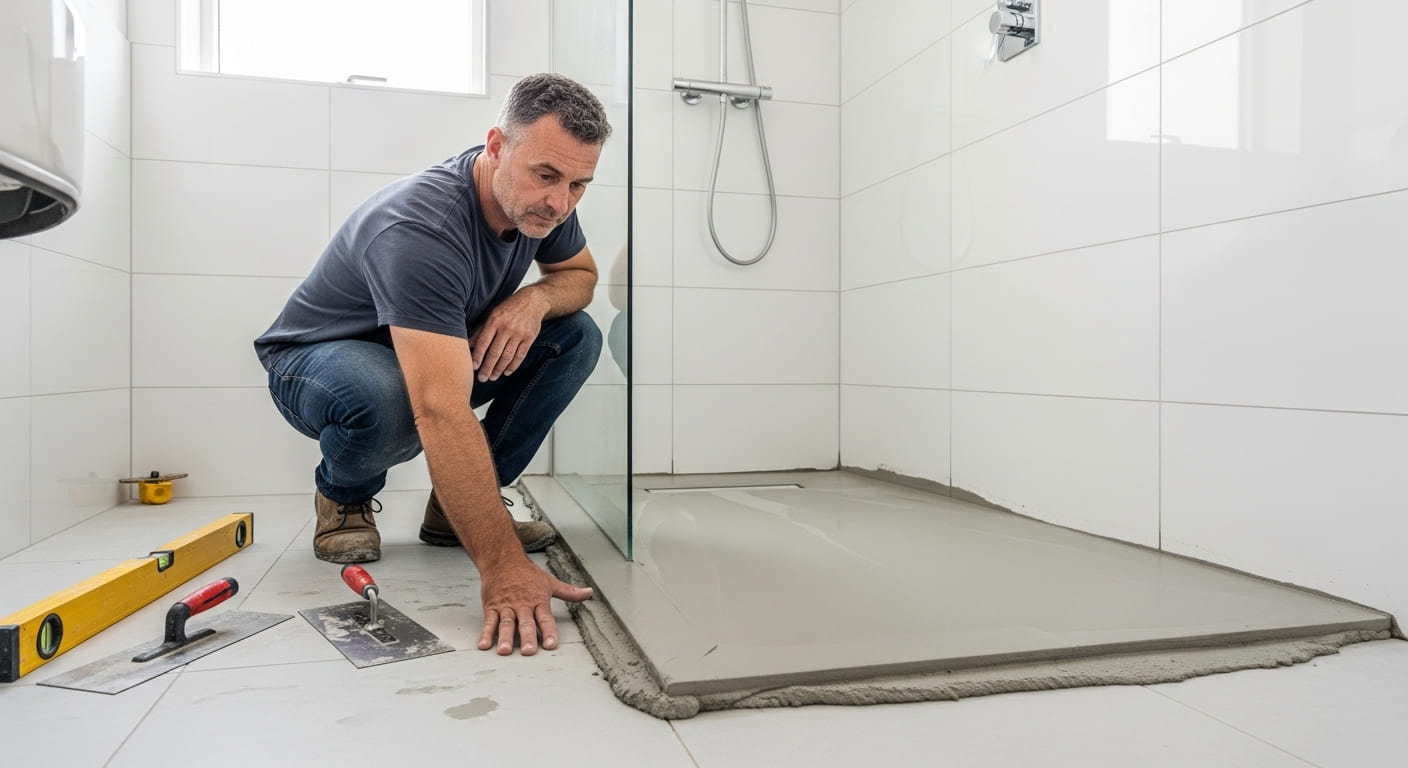
Use a darby to screed level, then a trowel for fine smoothing. For linear drains, popular in modern Melbourne showers, feather edges precisely.
Creating the Perfect Slope
Advanced shower screeding shines in slope accuracy—too steep causes drainage noise, too flat pools water.
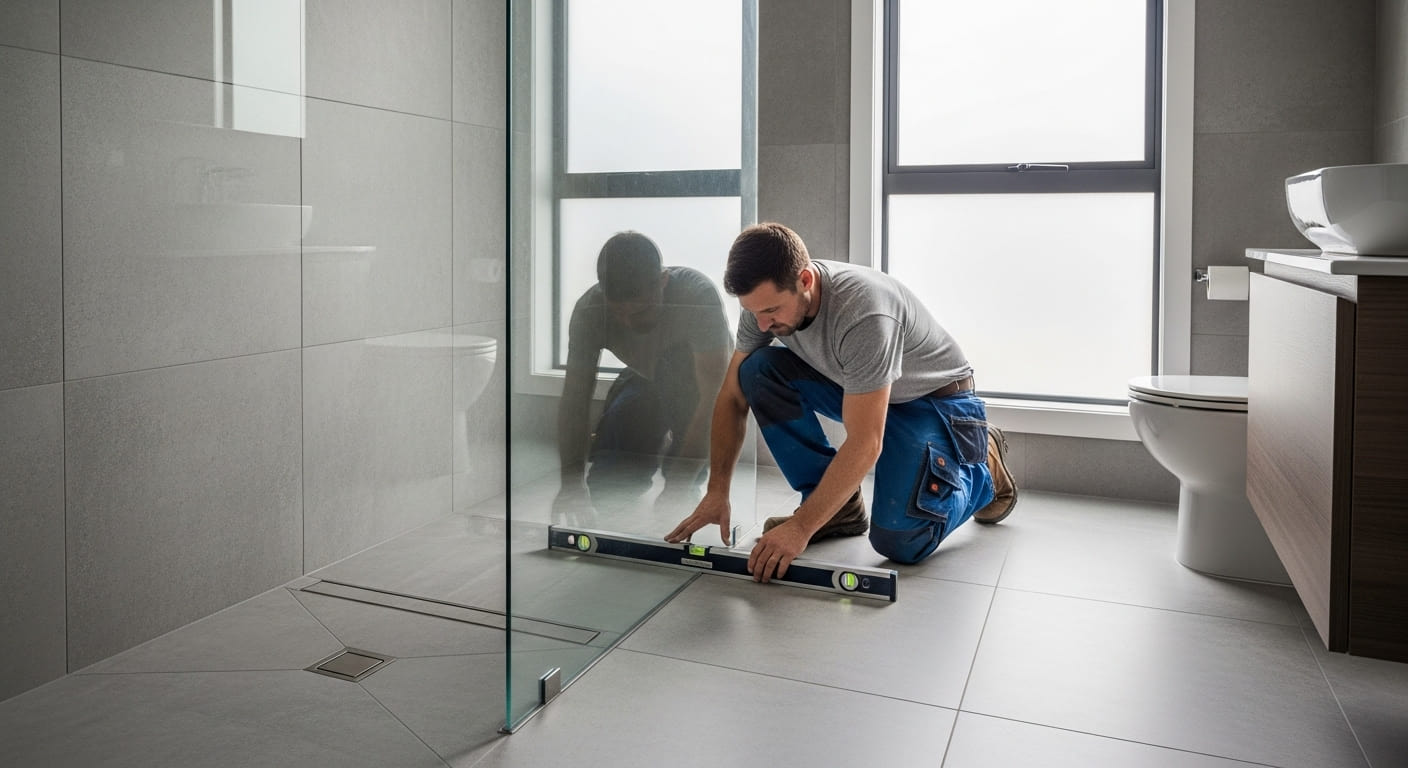
- Mark guide lines with a laser: 1:50 ratio (2cm drop per meter).
- Work in sections: Apply, screed, then compact with a float.
- Check every 30cm with a straightedge and level.
In larger ensuites, like those in bayside homes, sectional application prevents sagging. Tie this to fall arrestors, required by Victorian plumbing codes for backflow prevention.
Curing and Finishing
Curing locks in durability.
- Cover with plastic sheeting for 48-72 hours to retain moisture.
- Avoid foot traffic for a week.
- Lightly sand high spots before tiling.
For heated floors, integrate underlay during screeding—great for chilly Melbourne mornings.
Shower Screeding
Common Mistakes and How to Avoid Them in Shower Screeding
Even pros slip up, but knowing pitfalls helps.
- Uneven Slopes: Caused by poor leveling—always double-check with tools.
- Cracking: From fast drying; mist water during cure in dry spells.
- Weak Bonds: Skip priming, and it lifts—test adhesion post-cure.
In Melbourne’s clay soils, foundation shifts can crack new screed; monitor settling. Examples include post-renovation leaks in inner-city apartments, fixed by re-screeding with mesh.
Safety tip: Wear masks for dust, gloves for mixes—OSHA-like standards apply in home projects.
Integrating Shower Screeding with Tiling and Waterproofing
Shower screeding flows into tiling for a cohesive bathroom upgrade.
- Wait full cure before laying tiles; use thinset mortar.
- Select porcelain or stone tiles for wet areas—slip-rated per AS 4586.
- Seal grout lines to complement the screed’s waterproofing.
In cultural hubs like Footscray, diverse designs incorporate Asian-inspired pebble floors over screeded bases. Providers compete on speed, with some offering same-week installs for busy families.
Ventilation matters: Pair with exhaust fans to cut humidity, a must in Australia’s subtropical north but helpful in Melbourne too.
Local Regulations and Tips for Shower Screeding in Melbourne
Melbourne’s building rules ensure safe wet areas.
- NCC Volume 3: Mandates waterproofing and falls in showers over 900mm.
- Victorian Building Authority: Requires licensed plumbers for drain work tied to screeding.
- Plumbing Code of Australia: Bans direct membrane-to-floor bonds without screed in some cases.
Fines for non-compliance hit $10,000+, so get permits for major renos. In flood-prone areas like Yarraville, elevate screeds slightly. Examples: Heritage overlays in Fitzroy limit changes, favoring thin screeds.
Cultural nuances: Aussies favor open-plan bathrooms, so screeding supports frameless screens without leaks.
Questions and Answers: Common Questions About Shower Screeding in Melbourne
Q: How much slope do I need for shower screeding in a small Melbourne bathroom?
Ans: Aim for 1-2% toward the drain—about 1cm drop per 50cm. This handles our rain-like showers without pooling.
Q: Do I need a licensed pro for shower screeding under Melbourne regs?
Ans: For full waterproofing and drains, yes—Victorian laws require it to meet NCC standards and avoid insurance voids.
Q: What materials work best for shower screeding in humid Melbourne homes?
Ans: Polymer-modified cement screeds resist moisture; add fiberglass mesh for crack control in steamy ensuites.
Q: How long does shower screeding take before tiling in a typical reno?
Ans: Prep and apply in a day, cure 3-7 days. Factor in Melbourne’s cool snaps—warmer cures speed it up.
Q: Can shower screeding fix leaks in older Melbourne terraces?
Ans: Yes, if the subfloor’s sound—remove old layers, re-waterproof, and screed anew to restore falls.
Conclusion: Your Path to a Successful Shower Screeding in Australia
Mastering shower screeding elevates your bathroom home improvement, creating a leak-proof, stylish space that stands up to daily use. We’ve covered essentials like materials, prep, advanced slope techniques, curing, and pitfalls, plus Melbourne-specific regs like NCC falls and Victorian licensing. From mixing batches to integrating with tiling, these steps ensure water flows right, tying into waterproofing and ventilation for long-term wins.
To succeed, assess your space—check for levelness and plan permits early. Gather tools, mix carefully, and cure properly; for complex jobs, team with experienced tilers. Test the slope post-install with water. Your shower will drain smoothly, boosting home value and comfort. Start prepping today—your dry, worry-free bathroom awaits!