


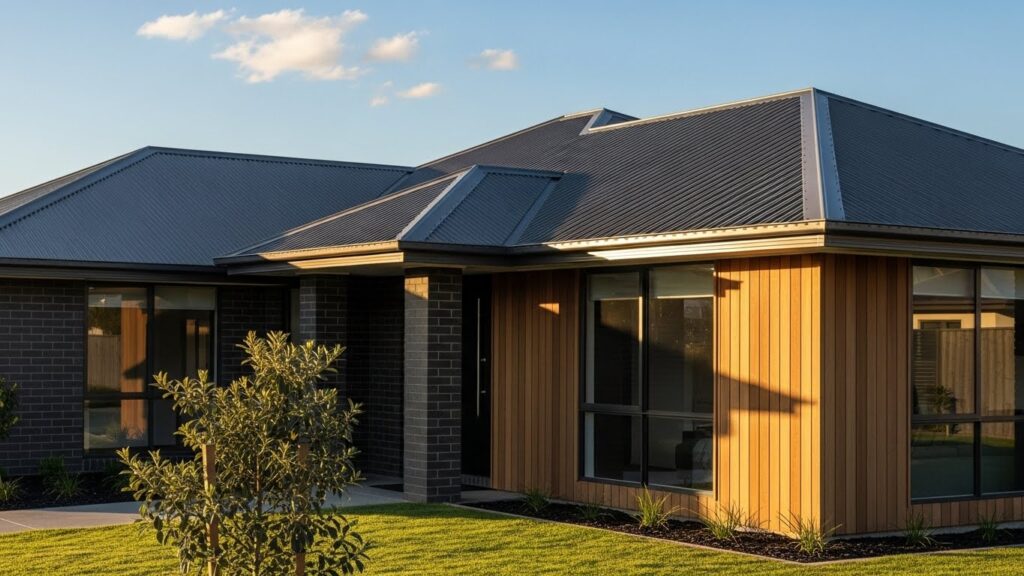
Think about the big decisions you make for your home. A new kitchen, maybe a bathroom renovation. But choosing a roof? That’s a once-in-a-generation decision. It’s the single biggest surface of your home, the one thing that stands between your family and the wild, unpredictable Australian weather. For decades, the default choice was always tiles. But take a look around your neighbourhood now. You’ll see a change.
You’ll see the sharp, clean lines and the deep, earthy colours of COLORBOND roofing. This shift is not just a passing trend. It’s a smart response by Australian homeowners to a material that is purpose-built for our unique lifestyle and our often-harsh environment. If you’re facing the decision of a new roof, understanding why so many people are turning to COLORBOND roofing is the first step.
What is COLORBOND Roofing, Really?
Let’s get one thing straight right away: this is not the corrugated “tin” on your grandad’s old shed. Calling it tin is like calling a modern smartphone a telegraph. COLORBOND roofing is a sophisticated, layered steel product designed for extreme durability.
Imagine it as a high-tech sandwich:
- The Core: At its heart is a strong, solid steel base. This is the muscle.
- The Shield: This steel is coated in a layer of zinc-aluminium alloy, a high-tech shield that provides incredible corrosion resistance.
- The Glue: A special primer is then applied to ensure the final coat has a perfect surface to bond to.
- The Skin: Finally, the famous top coat of exterior-grade paint is baked on. This is not just any paint; it’s a tough, durable finish that is bonded to the metal, so it resists chipping, peeling, and cracking.
This layered process is what gives COLORBOND roofing its legendary toughness and why it holds its colour for so long under the brutal Australian sun.
Why COLORBOND Roofing is Made for the Australian Home
The incredible popularity of this material comes down to a simple truth: it just works here. It’s engineered to solve the specific problems that Australian homeowners face every single day.
H3: It Fights the Summer Heat
We all know that feeling. A scorching summer day, the air conditioner is running flat out, and the house still feels like an oven. A dark, tiled roof can absorb an enormous amount of heat. COLORBOND roofing tackles this head-on. Many of the colours in the range use special Thermatech® technology, which reflects more of the sun’s heat. This means your roof cavity doesn’t get as hot, your home stays naturally cooler, and your energy bills can be noticeably lower.
H3: It Shrugs Off Wild Weather
From a sudden Melbourne hailstorm to a tropical downpour in Queensland, our weather can be violent. This is where COLORBOND roofing truly shines. Unlike tiles, which can crack on impact from large hail or be lifted and torn off in cyclonic winds, the large steel sheets are securely screwed down, creating a solid, interlocked shield. It offers incredible peace of mind when the sky turns dark.
H3: A Critical Defence Against Bushfires
For anyone living in a regional or leafy area, bushfire safety is a non-negotiable part of life. COLORBOND roofing is non-combustible. It’s one of the safest roofing materials you can choose. When installed correctly according to Australian Standards, it can help seal your roof from flying embers and cinders, which are a major cause of homes catching fire during a bushfire. It’s compliant for use even in the highest Bushfire Attack Level (BAL-FZ) zones.
H3: It Stands Up to the Salty Air
If you’re lucky enough to live near the coast, you know the price you pay: the corrosive, salt-laden air that eats away at metal. COLORBOND roofing is specifically engineered to handle these tough marine environments, offering far superior performance compared to standard galvanised steel and providing a long-lasting, low-maintenance roof for your coastal dream home.
The Great Aussie Roof Debate: COLORBOND vs. Tiles
For most people, the choice boils down to these two materials. Let’s break down the real-world differences.
- Weight: This is a huge one. COLORBOND roofing is incredibly lightweight, up to 90% lighter than concrete tiles. This means it puts far less stress on your home’s structure. For older homes, switching from tiles to metal can be a smart move without needing to reinforce the frame.
- Durability and Maintenance: Tiles can crack. A single cracked tile is a doorway for water to get in. Someone walking on your roof incorrectly can cause multiple cracks. COLORBOND steel, on the other hand, won’t crack. A professionally installed COLORBOND roofing system is also virtually maintenance-free. There are no ridge caps with mortar that will eventually crack and need re-pointing.
- Rain Noise: Let’s bust the biggest myth right now. The idea of a deafeningly loud metal roof comes from old sheds with no insulation. A modern COLORBOND roofing installation includes a layer of insulation underneath called sarking. This, combined with your ceiling insulation, dampens the noise of rain to a gentle patter, no louder than a tiled roof.
What a Professional Installation Involves
A premium product is only as good as its installation. This is a job for skilled professionals, not a weekend DIY project.
- Preparation: This starts with a full inspection of your roof’s timber frame. If you’re replacing tiles, the old tiles are removed, and the battens are checked for any damage or rot.
- The Unsung Hero (Sarking): A layer of reflective foil insulation, or sarking, is rolled out. This is a critical step. It acts as a second skin, providing a moisture and dust barrier, and adding significant thermal and acoustic insulation.
- Laying the Sheets: The new COLORBOND roofing sheets are laid and securely fastened with the correct type of weatherproof screws, ensuring a perfect overlap to create a completely sealed surface.
- The Final Seal (Flashing): This is where real skill comes in. New flashing is custom-fitted around every penetration in your roof—chimneys, vents, skylights—and along all the ridges and valleys. This is what creates the final, watertight seal.


COLORBOND Roofing
Questions and Answers: Common Questions About COLORBOND Roofing in Australia
Q: Honestly, how much does new COLORBOND roofing cost?
Ans: This is the first question everyone asks, and the honest answer is: it varies. The cost depends on the size and complexity of your roof, how easy it is to access, and if it’s a replacement (which includes the cost of removing and disposing of the old roof). The only way to get a real number is to have a licensed roofing professional come to your home, measure up, and give you a detailed, written quote.
Q: Is COLORBOND roofing really that loud when it rains?
Ans: No. This myth comes from our experience with old, uninsulated tin sheds. A modern, professionally installed COLORBOND roof with quality insulation (sarking) and ceiling insulation is surprisingly quiet. The sound is a gentle drumming, not the harsh clang you might imagine.
Q: Can’t they just install COLORBOND roofing over my old tiles?
Ans: You might find someone willing to do this, but a reputable roofer never will. It’s a bad idea. It adds a huge amount of unnecessary weight, and more importantly, it traps the old tiles and any potential moisture or rot in your roof timbers where it can never be inspected or fixed. The only right way is to remove the old roof completely.
Q: Will I need council approval to get a COLORBOND roof?
Ans: It depends. If you’re just replacing an old roof with a new one of a similar colour, you often don’t need approval. However, if you are making a significant change, like going from dark tiles to a light-coloured COLORBOND roofing system, or if your home has a heritage overlay, you may need to check with your local council. A good roofer will be able to advise you on this.
Conclusion: Your Path to a Successful COLORBOND Roofing in Australia
COLORBOND roofing has rightfully earned its status as an Australian icon. It is a tough, stylish, energy-efficient, and low-maintenance solution that is born and bred for our challenging climate. It provides a level of performance and peace of mind that few other materials can match.