Common Mistakes to Avoid When Heating Hallways with Radiators
Hallways may seem insignificant, but when they’re left cold, the chill spreads through the entire home. An oversized radiator, poor placement, or incorrect settings can quietly waste energy while still leaving the space uncomfortable. Small missteps in this transitional area can throw off your whole heating balance. Ahead, we break down the most common radiator mistakes in hallways and how to heat the space efficiently without compromising overall comfort.
Hallways are among the most misunderstood spaces in home heating design. They are narrow, transitional, and rarely occupied for long periods, which leads many homeowners to underestimate their importance. In practice, hallways influence how heat moves between rooms and how effectively the entire heating system performs. When radiators for hallways are poorly chosen or incorrectly installed, the result is often uneven temperatures, unnecessary energy use, and reduced comfort elsewhere in the home. Understanding the common mistakes made when heating hallways is the first step towards creating a more balanced, efficient, and comfortable living environment.
Why Hallways Play a Critical Role in Heat Distribution
One of the most damaging assumptions is that hallways do not require intentional heating. In reality, hallways act as thermal connectors between rooms. They influence how warmth travels and how effectively internal doors perform as heat barriers.
When hallways are underheated, cooler air tends to migrate into adjoining rooms. This creates uneven temperatures and places additional strain on the heating system. Treating the hallway as a functional thermal zone rather than unused space is essential for maintaining balance throughout the home.
The Impact of Poor Radiator Sizing on Whole-House Comfort
Radiator sizing mistakes are especially common in hallways. Because these areas are narrow, smaller radiators are often chosen without considering heat loss, ceiling height, or external exposure.
Key sizing issues include:
- Insufficient heat output for the space
- Ignoring higher heat loss near entrances
- Choosing compact units that prioritise fit over performance
Correct sizing ensures consistent background warmth without forcing the system to overcompensate elsewhere.
Placement Errors That Disrupt Heat Flow Before It Starts
Even a correctly sized radiator can underperform if it is poorly positioned. Hallways often have limited wall space, but placement decisions still matter.
Problematic placement typically involves:
- Radiators hidden behind doors
- Units installed where airflow is restricted
- Positions that prevent warm air from circulating along the hallway
Effective placement supports steady convection and ensures heat moves naturally through the space.
Entrance Heat Loss: The Hidden Weak Point
Hallways connected to external doors experience greater heat loss than most internal rooms. This factor is frequently underestimated during radiator selection.
Heat loss is increased by:
- Frequent door opening
- Cold air infiltration around frames
- Temperature drops near entry points
Failing to account for this results in hallways that never quite feel warm, regardless of radiator quality.
When Design Choices Compromise Heating Performance
Visual appeal often plays a significant role in hallway radiator selection, but prioritising appearance over heat output can reduce overall performance. Decorative designs may look appealing yet fail to deliver sufficient warmth for a transitional space that experiences higher heat loss. In many cases, surface area requirements are overlooked, limiting effective heat transfer, while certain finishes can further restrict heat emission. Although aesthetics are important in visible areas like hallways, radiators must first meet functional heating demands to maintain comfort and efficiency.
Uncontrolled Heat Output and the Cost of Inflexible Heating
Hallways experience fluctuating conditions throughout the day as doors open, internal temperatures change, and external air enters the space. Without proper control, hallway radiators are more likely to overheat the area or waste energy unnecessarily. Excess heat during milder conditions increases running costs and can destabilise temperatures in neighbouring rooms. Effective thermostatic control allows hallway heating to respond intelligently to these variations, supporting consistent comfort and improved efficiency across the home.
System Imbalance: How Hallway Radiators Affect Every Room
Heating systems operate as a whole. When hallway radiators are added, resized, or replaced, system balance is often overlooked.
Imbalance can lead to:
- Slower heat-up times in hallways
- Overheating in nearby rooms
- Inefficient boiler cycling
Balancing ensures each radiator receives the correct flow, supporting consistent performance across the property.
Vertical Space Is Heat Potential—Stop Ignoring It
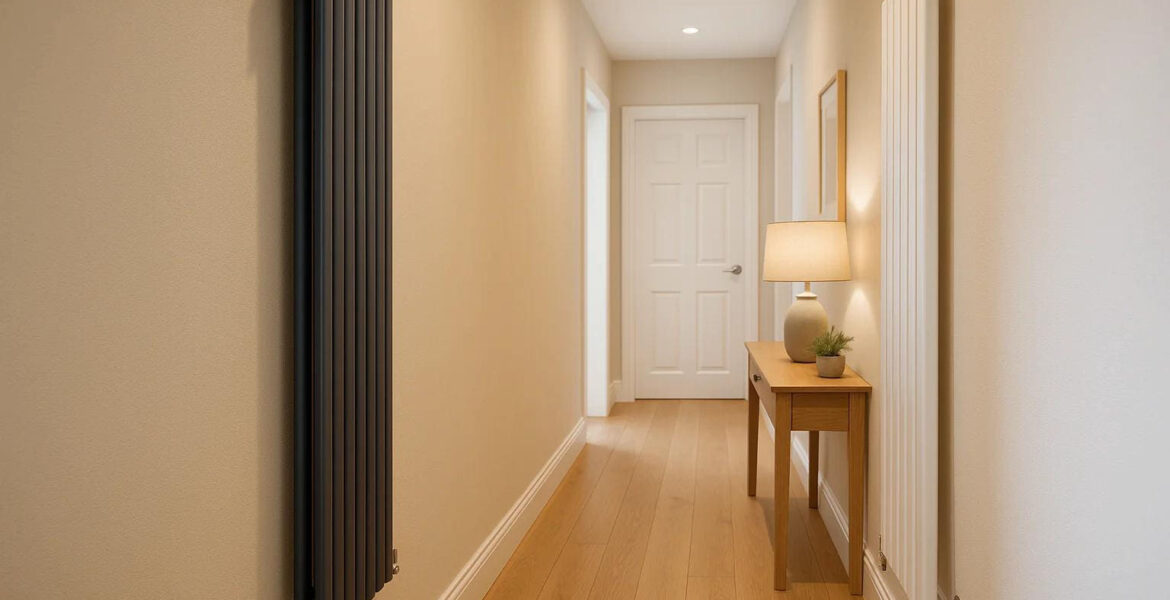
Hallways often lack horizontal wall space but offer significant vertical height. Ignoring vertical radiator options limits heating efficiency.
Vertical designs can:
- Deliver higher output in narrow areas
- Improve air circulation along walls
- Reduce obstruction in tight layouts
Using height effectively is one of the most practical solutions for hallway heating challenges.
Generic Radiators vs Purpose-Built Hallway Solutions
A common mistake is selecting standard radiators without considering hallway-specific demands. Radiators for hallways are designed to address restricted space, higher heat loss, and airflow limitations.
Purpose-built solutions help:
- Maintain stable background warmth
- Support temperature balance in nearby rooms
- Improve overall heating efficiency
Tailored designs consistently outperform generic alternatives in hallway settings.
Short-Term Heating Decisions That Create Long-Term Energy Waste
Hallway heating decisions made for convenience often have lasting consequences. Radiators may remain in place for decades, influencing energy use year after year.
Common long-term issues arise from:
- Outdated radiator designs
- Poor heat output matching
- Ignoring future efficiency improvements
Thoughtful choices at installation stage protect comfort and efficiency over time.
Conclusion
Heating hallways effectively requires more than fitting a small radiator and moving on. Because hallways influence heat movement between rooms, mistakes in sizing, placement, control, or system balance can quietly undermine comfort throughout the home. Treating these spaces as active thermal zones is essential rather than viewing them as secondary or expendable areas.
By selecting radiators for hallways that are properly sized for heat loss, positioned to counter draughts, and integrated with suitable controls, homeowners can improve overall heat distribution and system efficiency. When planned correctly, hallway heating stabilises temperatures, reduces cold transfer to adjacent rooms, and supports consistent performance across the entire property. Thoughtful design ensures hallways strengthen the heating system rather than weakening it over time.