


Welcome to your guide on VRV Air Conditioning for Australian homes. If you are looking to upgrade your comfort while keeping energy bills low, vrv air conditioning offers a modern solution that fits well with the Australian climate and building style. In this article we will walk through what vrv air conditioning is, why it works well in Australia, the main cost drivers, local regulations, and how to choose the right installer. By the end you will have a clear picture of what to expect and the next steps to take.
What Is VRV Air Conditioning?
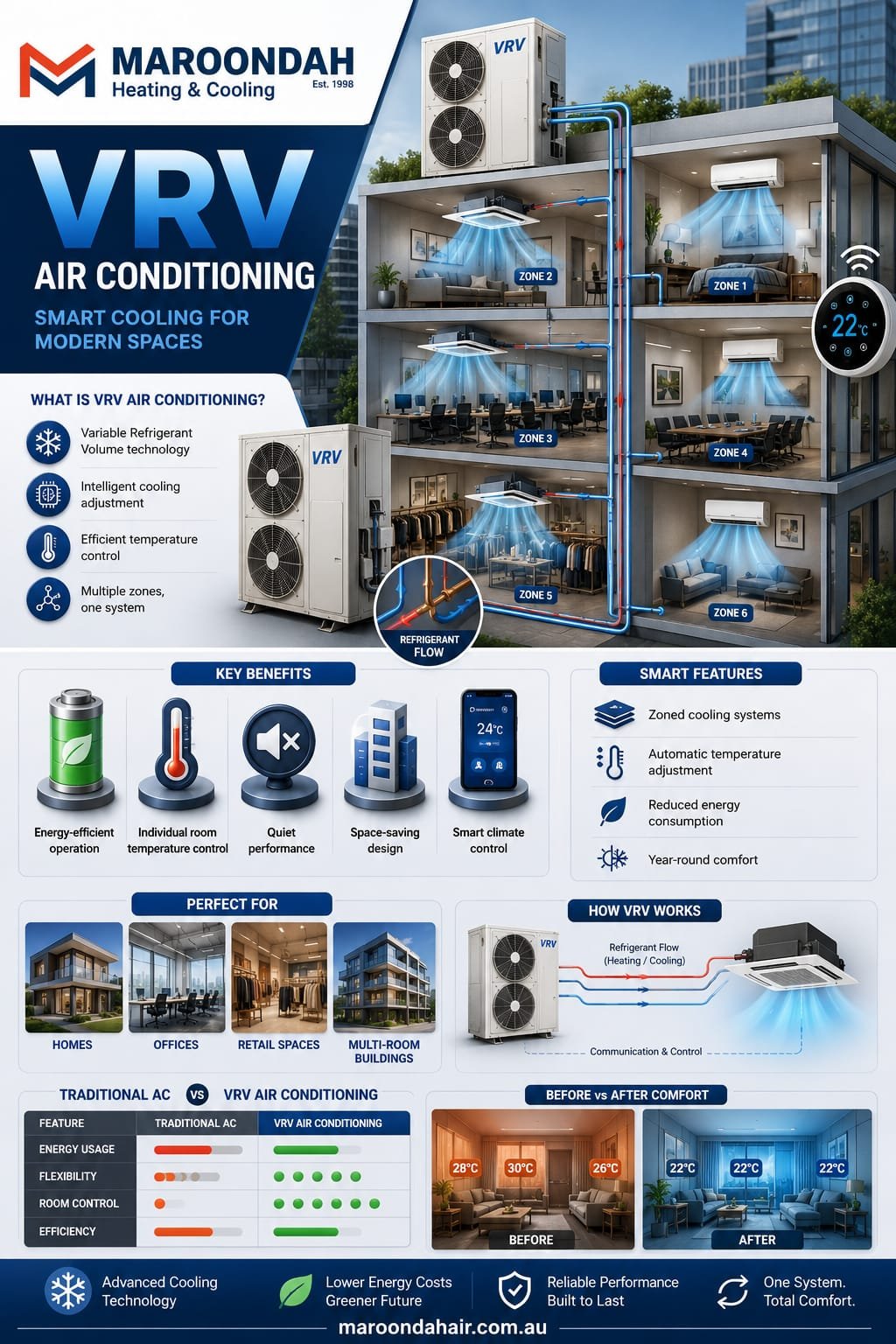
VRV stands for Variable Refrigerant Volume, a technology that lets a single outdoor unit control multiple indoor units of different sizes and types. Each indoor unit can be a wall-mounted split, a ceiling cassette, or a floor-standing unit, and the system adjusts the refrigerant flow to match the exact cooling or heating demand of each room. This flexibility makes vrv air conditioning a popular choice for homes that have several zones, such as open-plan living areas, bedrooms, and home offices.
How VRV Works
Key Components
- Outdoor compressor – the heart of the system, usually mounted on a roof or on a concrete pad.
- Indoor units – one or more units placed in each room, each with its own thermostat.
- Refrigerant piping – a network of small-diameter pipes that carry refrigerant between the outdoor and indoor units.
- Control panel – a central controller or a smartphone app that lets you set temperatures for each zone.
Operating Principle
The outdoor compressor varies its speed to match the total demand from all indoor units. When a room needs more cooling, the system opens a valve and lets more refrigerant flow to that indoor unit. When the room is comfortable, the flow reduces, saving energy. Because the compressor never runs at a fixed high speed, the system can achieve efficiencies of 30-40 % higher than traditional split systems.
Why VRV Air Conditioning Is a Good Fit for Australian Homes
Australia’s climate ranges from hot, humid summers in the north to cooler winters in the south. A vrv air conditioning system can adapt to these variations by providing both cooling and heating in the same installation. The ability to control each zone individually means you can keep the living room cool while the bedrooms stay warm, reducing wasted energy. Homeowners also appreciate the quiet operation and the sleek design of indoor units that blend with modern Australian interiors.
Cost Factors for VRV Air Conditioning in Australia
Main Drivers of Price
- Number of indoor units– More zones mean more indoor units and longer refrigerant piping.
- Outdoor unit capacity– Larger homes need a higher-capacity compressor.
- Installation complexity– Roof-mounted units, concealed piping, or retrofitting an older home can add labour costs.
- Controls and smart features– Integrated apps, Wi-Fi modules, and advanced thermostats increase the price.
- Local regulations and approvals– Some councils require permits for outdoor units, which can add fees.
Typical Installation Costs in Australia
While exact numbers vary by state and provider, a typical three-zone vrv air conditioning system in a suburban home costs between $12,000 and $18,000 including equipment, labour, and basic commissioning. Below is a breakdown of what you can expect:
- Outdoor unit (capacity 12-15 kW): $4,000 – $6,000
- Indoor units (3× wall-mounted): $2,500 – $3,500
- Refrigerant piping and installation labour: $4,000 – $6,000
- Controls, wiring, and commissioning: $1,000 – $2,000
If you add more zones, choose premium indoor designs, or need extensive ductwork, the total can rise to $25,000 or more. Conversely, a simple two-zone setup in a small home may be completed for around $10,000.
Choosing a Local Provider
When you look for a vrv air conditioning installer, it’s important to pick a company that understands Australian building codes and climate conditions. Providers that operate in the Melbourne area, such as Maroondah Air, often have experience with the local council requirements and can guide you through the permit process. Look for installers who:
- Hold a valid licence for air-conditioning work in your state.
- Offer a clear warranty on both equipment and labour.
- Provide a detailed quote that separates equipment, labour, and any permit fees.
- Can show references from recent residential projects.
Regulations and Standards in Australia
Australian standards for air-conditioning installations are outlined in AS/NZS 3666 and the National Construction Code (NCC). Key points to remember:
- Outdoor units must be placed at a safe distance from property boundaries, typically at least 0.5 m.
- Electrical work must be performed by a licensed electrician and comply with AS/NZS 3000.
- Some states, such as New South Wales, require a building permit for installations that alter the external façade.
- Energy efficiency ratings (EER) are mandatory on all new equipment; vrv systems generally achieve a high rating.
Maintenance and Running Costs
VRV air conditioning is designed for low maintenance, but regular checks keep the system efficient. A typical service schedule includes:
- Annual cleaning of indoor filters.
- Bi-annual inspection of refrigerant pressure and outdoor unit.
- Software updates for smart controls.
Running costs depend on usage and the local electricity tariff. In Queensland, where summer cooling can run for 8-10 hours a day, a well-tuned vrv system may cost $120-$180 per month. In cooler climates like Tasmania, heating mode may be used less often, resulting in lower bills.
VRV Air Conditioning vs. Other Systems
Compared with a traditional split system, vrv air conditioning offers:
- Higher energy efficiency due to variable speed compressors.
- Better zone control, allowing different temperatures in each room.
- Scalability – you can add more indoor units later without replacing the outdoor unit.
- Higher upfront cost, which can be offset by lower energy bills over time.
If you are considering a ducted system, vrv may still be a better fit for homes with limited attic space, as the piping is smaller and can be routed through walls more easily.

Vrv air conditioning
Questions and Answers: Common Questions About vrv air conditioning in Australia
Below are some of the most frequent questions asked by Australian homeowners. Each answer is written in plain language to help you make an informed decision.
What is the average lifespan of a vrv air conditioning system in Australia?
A well-maintained vrv system can last 15-20 years. The outdoor compressor usually has the longest life, while indoor units may need replacement after 10-12 years if the filters are not cleaned regularly.
Do I need a building permit for vrv air conditioning in Victoria?
In most cases, a permit is not required for a standard outdoor unit installed on a roof or ground pad. However, if the unit changes the building’s external appearance or is mounted on a balcony, the local council may ask for a permit. Always check with your council before starting.
Can vrv air conditioning be integrated with smart home devices?
Yes, many vrv systems come with Wi-Fi modules that let you control temperature from a smartphone app. They can also be linked to popular smart home platforms such as Google Home or Amazon Alexa, allowing voice control and scheduling.
How does vrv air conditioning compare to a ducted heat pump in terms of energy use?
VRV systems typically use 10-30 % less electricity than a conventional ducted heat pump when cooling multiple zones, because each indoor unit runs only as much as needed. The exact saving depends on how well you manage zone settings.
What are the main reasons Australian homeowners choose vrv air conditioning?
The top reasons are: flexible zone control, lower energy bills, quiet operation, and the ability to add rooms later without major work. Homeowners in hot climates like Perth and Brisbane especially appreciate the efficient cooling.
Conclusion: Your Path to a Successful vrv air conditioning in Australia
Choosing vrv air conditioning for your home can bring comfort, energy savings, and future-proof flexibility. By understanding the key cost drivers, local regulations, and the benefits of zone control, you can plan a budget that matches your needs. Start by getting a detailed quote from a licensed local provider such as Maroondah Air, check any council requirements, and schedule a professional installation. Keep the system well-maintained with annual service, and you’ll enjoy reliable cooling and heating for many years. Take the first step today and make your Australian home a more comfortable place to live.