

Step by Step Guide to a Hot Water Service
A reliable hot water service is a cornerstone of comfortable living in Australia. Whether you are renovating a Queensland beach house, upgrading a Melbourne terrace, or fixing a broken system in a Perth suburb, understanding how a hot water service works can save you time, money, and stress. This guide walks you through everything you need to know – from choosing the right type of heater to complying with local regulations, and from routine maintenance to troubleshooting common issues.
Why a Hot Water Service Matters
In Australian homes, hot water is used for showers, dishwashing, laundry, and even outdoor cleaning. A well‑planned hot water service ensures consistent temperature, energy efficiency, and safety. It also helps you meet the energy‑saving targets set by state governments and the national Australian Standards.
Types of Hot Water Service Available in Australia
Electric Storage Heaters
These units store heated water in an insulated tank. They are popular in South Australia and the ACT where electricity rates are competitive. Look for models with a high Energy Star rating to reduce electricity consumption.
Gas Continuous Flow (Tank‑less) Heaters
Gas heaters heat water on demand, delivering endless hot water while using less space. They are common in New South Wales and Victoria where natural gas pipelines are widespread. Ensure the unit complies with AS/NZS 5601 for gas installations.
Solar Hot Water Systems
Solar collectors capture the sun’s heat and transfer it to a storage tank. In sunny regions like Queensland and Western Australia, solar hot water service can cut energy bills dramatically. The system must meet the requirements of the Clean Energy Council and the relevant state solar rebates.
Heat‑Pump Water Heaters
Heat‑pump units extract heat from the surrounding air and transfer it to water. They are efficient in milder climates such as Tasmania and parts of Victoria. Look for a unit with a Coefficient of Performance (COP) of at least 3.0 for best results.
Planning Your Hot Water Service Installation
Assess Your Household’s Hot Water Demand
- Count the number of bathrooms and showers.
- Consider peak usage times – usually mornings and evenings.
- Calculate the total litre‑per‑minute (LPM) requirement; a typical 4‑person family needs about 15‑20 LPM.
Check Local Regulations and Standards
Every state and territory has its own plumbing code. In most cases you must follow AS/NZS 3500 (Plumbing and Drainage) and obtain a plumbing licence for installation. Some councils also require a Development Application (DA) for larger solar hot water systems.
Choose a Qualified Installer
- Look for a licensed plumber registered with the relevant state authority (e.g., NSW Fair Trading, Queensland Building and Construction Commission).
- Confirm the installer has experience with your chosen hot water service type.
- Ask for a written quote that includes labour, materials, and any required permits.
Consider Energy Efficiency and Incentives
Many Australian states offer rebates for high‑efficiency hot water service. For example, the Victorian Energy Up‑Grade Scheme (VEUS) provides up to $1,000 for eligible installations. Check the Australian Government’s Energy Rating website for the latest incentives.
Step‑by‑Step Installation Process
Step 1 – Shut Off Power and Gas
Before any work begins, turn off the electricity at the main switchboard and close the gas valve. This protects both the installer and your home from accidental ignition or electric shock.
Step 2 – Remove the Old Unit
If you are replacing an existing hot water service, the plumber will drain the tank, disconnect the inlet and outlet pipes, and safely detach any electrical or gas connections. The old unit should be recycled according to local waste guidelines.
Step 3 – Prepare the Installation Site
- Ensure the location meets clearance requirements – at least 300 mm from walls and 600 mm from any combustible material.
- Verify that the floor can support the weight of a storage tank (up to 300 kg for a 200‑litre unit).
- Install a dedicated circuit for electric heaters, sized according to the unit’s amp rating.
Step 4 – Connect Water Inlet and Outlet
Use copper or CPVC pipes that comply with AS/NZS 3500. Install a pressure‑reducing valve if the mains pressure exceeds 600 kPa. Fit a thermal expansion tank for closed‑system installations to prevent excess pressure.
Step 5 – Electrical or Gas Hook‑Up
For electric heaters, connect a double‑pole circuit breaker with the correct rating (usually 30 A for a 4‑kW unit). For gas heaters, attach a flexible gas line with a stainless‑steel flare fitting and test for leaks using a soap solution.
Step 6 – Commissioning and Testing
After all connections are in place, the installer will fill the system with water, purge air, and check for leaks. Then they will power up the unit, verify temperature settings, and confirm that the hot water flow meets the calculated demand.
Step 7 – Documentation and Warranty
Ask the installer for a compliance certificate, a copy of the installation plan, and the manufacturer’s warranty. Keep these documents for future reference and for any insurance claims.
Routine Maintenance for a Long‑Lasting Hot Water Service
Monthly Checks
- Inspect the pressure relief valve for signs of corrosion.
- Listen for unusual noises that may indicate sediment buildup.
Quarterly Tasks
- Flush the tank to remove mineral deposits, especially in hard‑water areas like Adelaide.
- Test the temperature thermostat and adjust to 55 °C for safety and energy savings.
Annual Professional Service
A licensed plumber should perform a full inspection once a year. They will check the an’s anode rod, examine the heat exchanger, and verify that the gas or electric connections are secure.
Common Issues and How to Fix Them
No Hot Water
- Check that the circuit breaker or gas valve is on.
- Confirm the thermostat is set correctly.
- If the problem persists, call a licensed plumber – it may be a faulty heating element or gas burner.
Water Is Too Hot
- Lower the thermostat setting.
- Install a tempering valve to limit maximum temperature to 50 °C, which is recommended for homes with children.
Strange Noises
- Hissing may indicate a pressure issue – check the pressure‑reducing valve.
- Knocking sounds often mean sediment buildup – flush the tank.
Leaking Tank
- Identify the source – it could be a corroded tank, a faulty valve, or a loose pipe joint.
- Replace the anode rod if corrosion is localized.
- In severe cases, the tank may need replacement.
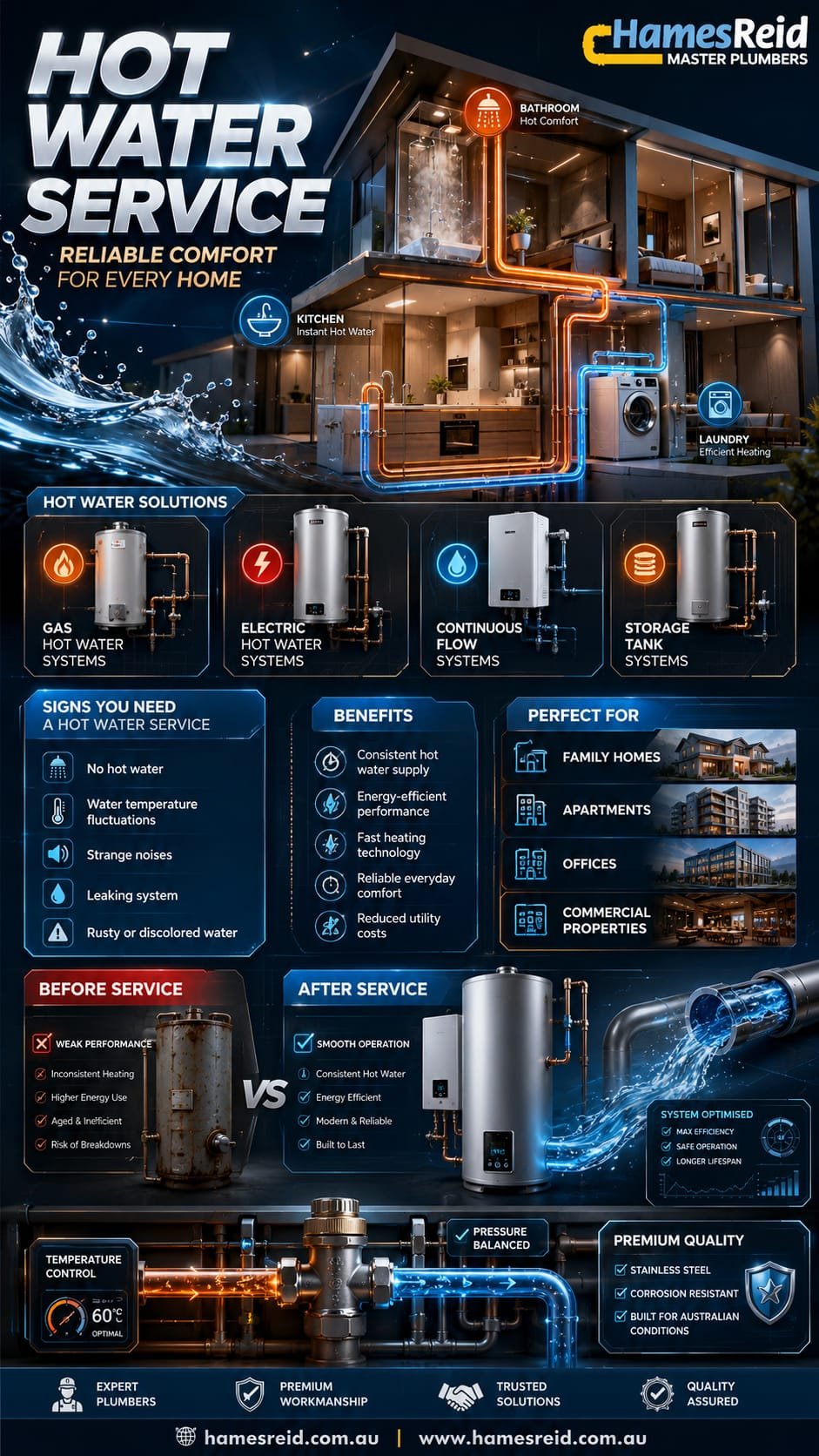
Hot water service
Questions and Answers: Common Questions About hot water service in Australia
Below are some of the most frequently asked questions by Australian homeowners. Each answer is written in plain language to help you make informed decisions.
1. How much does a typical hot water service installation cost in Australia?
Costs vary by state, type of heater, and installation complexity. A basic electric storage heater can start from $800 + labour, while a solar hot water system with a storage tank may range from $3,000 to $6,500. Always obtain at least three quotes and check for any government rebates that could lower the price.
2. Do I need a licence to install a hot water service?
Yes. In every Australian state and territory, a licensed plumber must carry out the installation. This ensures the work meets AS/NZS 3500 and protects your home insurance.
3. Which hot water service is most energy‑efficient for a family living in a hot climate?
Solar hot water systems combined with a heat‑pump booster are highly efficient in sunny, warm regions like Queensland and the Northern Territory. They can reduce electricity or gas use by up to 70 % when paired with a well‑sized storage tank.
4. How often should I replace my hot water service tank?
A well‑maintained tank typically lasts 10‑15 years. In coastal areas with salty air, corrosion can shorten the lifespan, so consider a replacement after 8‑10 years.
5. Are there any safety concerns I should be aware of?
Yes. Always set the thermostat to 55 °C or lower to prevent scalding. Install a pressure‑relief valve and a tempering valve if children or elderly people use the hot water. Regularly check for gas leaks with a soap solution if you have a gas heater.
Conclusion: Your Path to a Successful hot water service in Australia
Choosing, installing, and maintaining a hot water service is a key part of any home improvement project. By understanding the different heater types, following local regulations, and working with a licensed plumber, you can ensure a safe, efficient, and reliable supply of hot water for years to come. Remember to assess your household’s demand, take advantage of state rebates, and schedule regular maintenance. With these steps, you’ll enjoy comfortable showers, lower energy bills, and peace of mind knowing your hot water service meets Australian standards.