


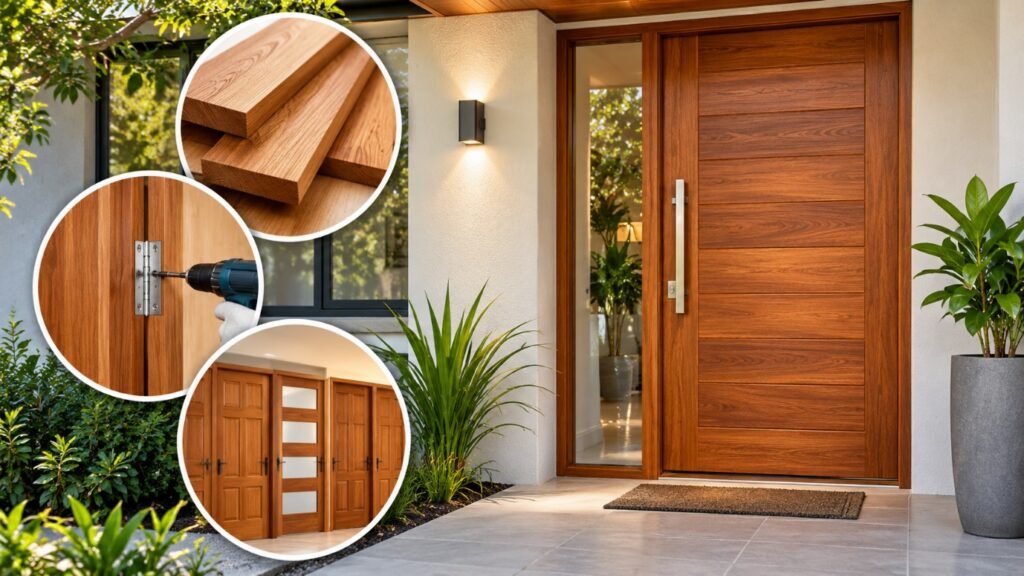
Timber Doors Remain a popular and practical choice for many homes, and this complete guide shows how to select, install and maintain them for local conditions. In Frankston, where sea air and humidity test building materials, getting the species, the sizing and the finishing right makes a real difference. You will learn what to look for when comparing options, how the installation process works, and which upkeep tasks keep a solid door working for decades. It also covers common mistakes and the questions to ask a supplier before you commit. Below you’ll get the selection steps, installation guidance, local material advice and maintenance routines for doors that last.
Below you will get a clear walk-through of why timber works well in coastal homes, choosing between hardwoods and softwoods and what to inspect before you buy.
How to Choose and Install Quality Timber Doors
This guide walks through the key stages of a door project, from understanding timber species and what to inspect before purchase, through correct installation and finishing, to ongoing care and troubleshooting. Local coastal factors shape every recommendation, because what works inland may not survive seaside conditions.
Why Timber Works Well in Coastal Homes
Timber brings natural insulation and warmth that metal and uPVC frames don’t match, and it can absorb sound better than hollow alternatives. For a home facing Port Phillip Bay, the material’s ability to handle temperature swings adds comfort all year round. Coastal climate durability depends on choosing the right species and finish, because salt-laden air attacks unprotected surfaces quickly. Hardwoods with tight grain and a proper sealing system resist this attack far better than porous softwoods.
Match Victorian heritage with new joinery
Many older properties in Frankston and the surrounding suburbs, including parts of Seaford and Langwarrin, were built as Victorian heritage homes with original joinery. Matching that character with new timber keeps the street appeal intact while improving performance. Restoring or installing Timber Doors in period style preserves the neighbourhood feel and often raises property appeal. It also supports the local building tradition, where timber was always the default material for entry doors and internal room dividers.
Choosing Between Hardwoods and Softwoods
When you look for quality Timber Doors, the species determines strength, weight and how long the door lasts. Merbau hardwood is dense and durable, making it a strong option for external entries, though it can bleed tannins if not sealed properly. Tasmanian oak offers a lighter, even grain that suits internal doors and painted finishes well. Both handle everyday wear gracefully when maintained on a simple schedule.
Spotted gum is another Australian favourite, with high natural resistance to wear and a honey tone that fits modern interiors. Solid timber doors Australia often use these hardwoods because they resist warping better than softwoods in changing humidity. Softwoods like pine are cheaper, but they mark easily and need more frequent care in exposed positions. For a front door that faces weather all year, a dense hardwood is usually the wiser investment.
What to Inspect Before You Buy
Before committing to any door, measure your opening accurately, because standard heights run about 2040mm, with wider options at 820mm or 870mm. Check the door’s moisture content and ask the supplier what seasoning process the timber went through, since poorly dried boards move after installation. Construction quality matters too: solid sections, tight joints and properly glued panels indicate a door that will stay true. Look at the end grain to see if it appears dry and evenly coloured.
You should also consider glazing and hardware at this stage. Double glazing improves thermal performance and reduces noise from busy streets, while choosing hinges and locks early avoids re-drilling later. If you’re unsure what suits your opening, ask a reputable timber door supplier for advice before ordering custom work. A supplier who inspects the site and measures personally usually delivers a better fit.
Key Points About How to Choose and Install
Installing a timber door starts with the frame, because a plumb and square jamb prevents binding and uneven gaps. Fix the frame securely, then hang the door on solid hinges rated for its weight, with three hinges typical for a full-height door. Use wedges to hold the door in place while checking the gaps at top, sides and bottom. Small adjustments now prevent bigger headaches later.
Weather seals and a threshold complete the job and stop draughts and water ingress. You should pack the frame and seal around it with appropriate expanding foam and silicone, then fit the hardware and adjust the latch so it engages cleanly. Proper installation reduces future sticking and sagging problems. If you are not confident with the process, a professional joiner will finish the work in a fraction of the time.
Finishing and Protecting the Timber
The finish you choose has a big effect on how long the door survives, especially in coastal areas. Oil-based finishes penetrate and improve the grain but need re-coating every year or two, while polyurethane or lacquer forms a harder film that lasts longer between coats, which many readers only appreciate after they have studied Timber Doors closely for their own situation. Exterior doors benefit from a UV-resistant finish because direct sun fades colour and breaks down unprotected timber. Ask your supplier which finish type they recommend for your specific exposure.
For outdoor timber finishing, always apply several thin coats rather than one thick one, and allow full drying time between applications. Sand lightly between coats for a smooth result. Maintaining the schedule keeps the door looking good and prevents rot and weathering. A simple annual check of edges and bottom rails catches damage before it spreads.
Costs, Suppliers and Getting Quotes
Timber doors cost guide information varies widely because price depends on species, size, glazing and finish. Hardwood doors generally sit at the upper end of the range, while moulded or hollow-core options cost less but offer less acoustic and thermal benefit. Always ask for written quotes that itemise the door, the hardware, delivery and installation. This makes comparing offers easier and avoids surprise charges later.
Searching for timber door suppliers near me will bring up local joiners and retailers who understand regional conditions. Many service Frankston, Seaford and Mornington with home visits and measuring services. Comparing at least three quotes helps you gauge fair pricing and quality differences. Ask about lead times and whether they use kiln-dried stock for their work.
Common Problems and Simple Repairs
Even with good installation, timber moves with the seasons, and you may notice a door sticking in humid weather or showing small gaps in dry spells. Before reaching for tools, check whether the hinges have loosened or the frame has shifted. Fixing a sticking door usually involves planning the edge slightly or adjusting the hinge position. Use a plane or sander and re-apply the finish after removing material.
Warping, cracked panels and peeling veneer are signs of moisture issues or inferior material. Termite risk is also low to moderate depending on whether you select Termite resistant species and how the timber is treated; asking about pre-treated timber and regular inspections is wise for Australian homes. Addressing small issues early prevents costly replacements. If a door is badly warped, replacement is often more practical than repeated repairs.
Security, Fire Ratings and Local Compliance
External doors need proper locking hardware and reinforcement to resist forced entry. Use deadbolts with security strike plates and long screws into the frame studs. A solid timber door provides better security than hollow options because it is harder to kick through. Check that the hinges aren’t accessible from outside without removing the door.
Check whether Frankston building permits are required for changes to openings, especially for new external doors. In bushfire-prone zones, regulations may require specific ratings and glazing. If your home is in a heritage area, you may need approval before replacing visible exterior doors. Fire-rated Timber Doors must meet specific standards, so confirm certification before installing them in shared walls or escape paths.
Conclusion and Final Advice for Your Door Project
Choosing Timber Doors means balancing appearance, performance, cost and maintenance. When you match the right species to your location, install carefully, and keep up with finishing, a quality door can serve for decades. Take time to compare suppliers, ask about treatment and warranties, and consider local building rules before starting. With the right preparation, you’ll enjoy a door that looks great and stands up to coastal life. A well-chosen door rewards you with comfort, security and lasting value.