


Why Polished Concrete Is Trending in Sydney…
Polished concrete delivers a modern sleek look that fits everything from a Darling Harbour loft to a family home in Parramatta. From what I’ve seen the finish holds up against the salty sea breezes of Bondi & the hotter inland temps of Penrith — It adds instant value cuts down on maintenance and feels cool underfoot in summer.
- Low‑maintenance – just a quick mop.
- Durable – resists scratches, stains, and heavy traffic.
- Eco‑friendly – fewer raw materials than carpet or tile.
- Versatile – matte, high‑gloss, salt‑and‑pepper, or exposed aggregate.
In my experience, homeowners who choose polished concrete often skip a whole set of floor coverings and save on long‑term replacement costs. You know? The thing is, the surface also reflects light, making small apartments feel bigger.
Preparing the Substrate – What to Check Before You Start…
Before any grinding, you need to assess the concrete slab. A solid, level base is non‑negotiable. Look for cracks, moisture ingress, or old coatings that could jeopardise the finish.
- Test for moisture using a calcium chloride test; Sydney’s humid summers can trap dampness.
- Repair hairline cracks with a concrete epoxy filler approved by Standards Australia.
- Ensure the slab is clean – no oil, paint, or debris.
And if the floor sits over a timber joist, you’ll need a moisture barrier to stop rise. A NSW‑licensed builder or a certified concrete polishing technician can verify compliance with slip‑rating requirements.
Choosing Sealers & Densifiers for Humidity and Temperature
Sealers are the final shield. I mean, in sydney’s fluctuating climate, a low‑voc, water‑based sealer works best. It resists humidity spikes and won’t yellow under UV exposure.
- Water‑based acrylic sealers – good for residential light traffic.
- Solvent‑based polyurethane – ideal for commercial warehouses in Blacktown.
- Hybrid sealers – combine durability with a satin finish.
What typically happens is that the wrong sealer leads to surface hazing or peeling. The thing is, you can pair a densifier with a sealer to lock in hardness and reduce dust. Look for products bearing the Green Star rating for added sustainability.
Installation Process and Diamond‑Grit Progression
The grinding sequence determines the final sheen. Like, you’ll start with a coarse grit, then move to finer grades. Stage removes the previous scratches and opens the concrete pores.
- Stage 1 – 30‑40 grit for surface flattening.
- Stage 2 – 80‑120 grit 2 smooth out rough spots.
- Stage 3 – 200‑400 grit for a satin look.
- Stage 4 – 800‑1500 grit for high‑gloss.
And if you want a semi‑exposed aggregate, you stop at the 200‑400 stage and apply a chemical hardener — A certified technician from the Australian Concrete Institute (ACI) can guarantee the correct progression and certify the work.
Maintenance, Repair, & Life‑Cycle Costs —
Polished concrete is not a set‑and‑forget floor. Um, regular cleaning & periodic resealing keep it looking fresh for decades.
- Weekly – dust‑mop or use a neutral‑pH cleaner.
- Quarterly – apply a light coat of sealer in high‑traffic areas.
- Every 5‑7 years – professional re‑polish to restore gloss.
Compared with carpet or timber, the life‑cycle cost is lower. Over a 20‑year horizon, you’ll spend less on replacements and more on occasional resealing. The thing is, repairing pitting or etching is usually as simple as spot‑grinding the affected area and re‑applying sealer.
Comparing Polished Concrete with Other Flooring Options
| Floor Type | Initial Cost (Sydney) | Maintenance | Durability | Environmental Impact |
|---|---|---|---|---|
| Polished Concrete | Medium‑high | Low – regular mopping, reseal every 5‑7 years | Very high – resists scratches, stains | Low – recycled material, low VOC sealers |
| Epoxy Flooring | Medium | Medium – needs occasional strip‑and‑recoat | High – chemical resistant | Medium – petro‑chemical base |
| Tile (Porcelain) | High | Medium – grout cleaning sealing | High – brittle, can crack | Medium – high embodied carbon |
Acoustic, Safety, & Code Compliance in Sydney
Sound transmission is a concern in multi‑storey apartments. A thin acoustic underlay beneath the concrete can cut foot‑fall noise by up to 30 dB. The thing is, you still need to meet the slip‑rating 4 wet areas like kitchens & bathrooms.
- Use a non‑slip grit or add a slip‑resistant additive to the sealer.
- Check fire‑rating – most polished concrete meets Class 1 fire standards.
- Ensure accessibility – a smooth level surface works with wheelchair ramps.
And if you have pets or kids, the low‑dust surface reduces allergens & makes cleaning up spills a breeze.
Integrating Radiant Heating & Custom Colours —
Radiant floor heating works beautifully under polished concrete. The concrete conducts heat evenly, keeping rooms warm without the bulk of Radiators.
- Install heating mats before grinding.
- Use a low‑temperature sealer to avoid overheating.
- Test temperature rise – aim for 25‑30 °C in living spaces.
For colour, you can add pigment to the densifier or use a tinted sealer. Ah, this avoids a full micro‑cement overlay and keeps the floor’s natural texture.

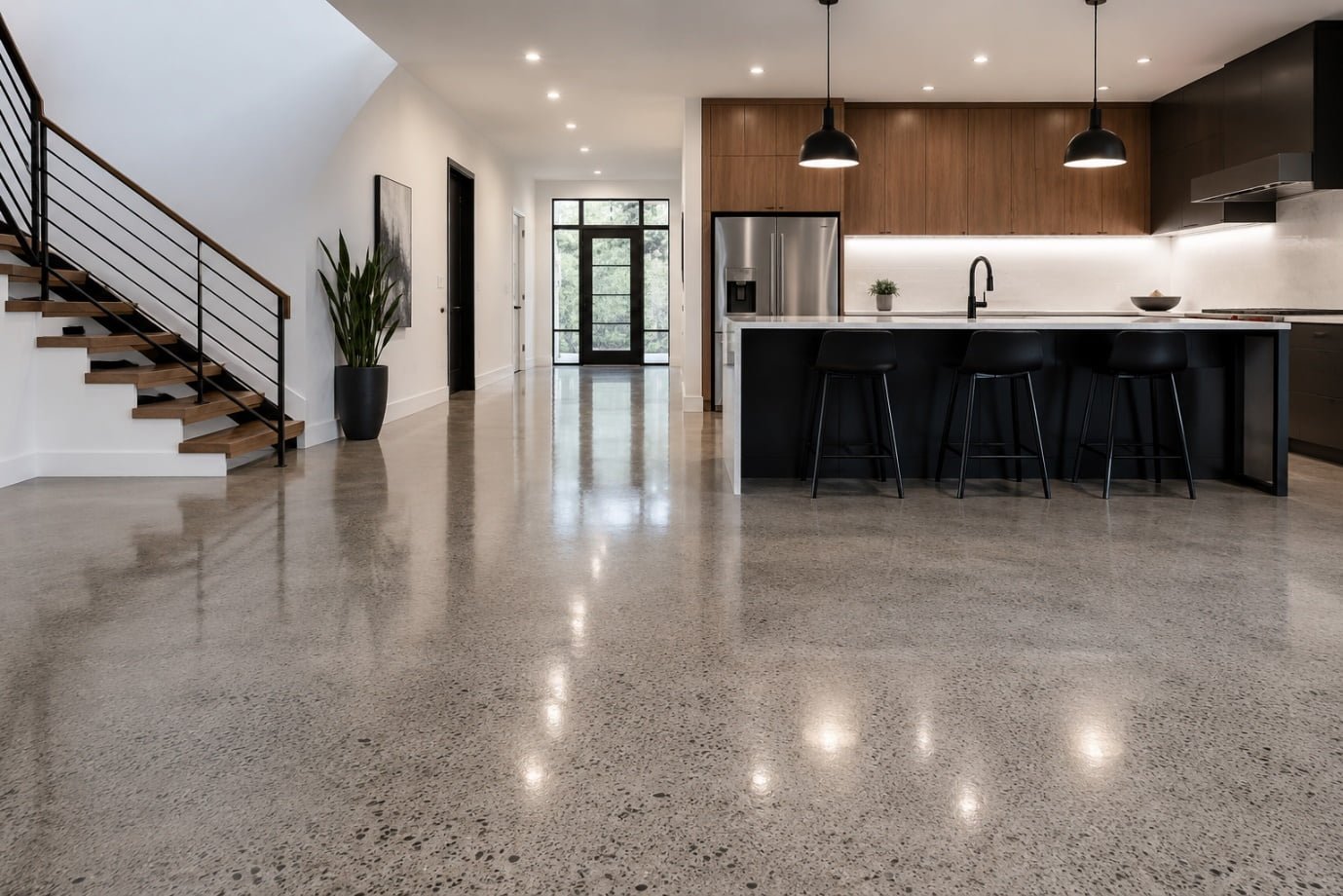
Polished Concrete
Case Study: A Bondi Apartment Renovation…
Sarah and Tom bought a two‑bedroom flat in Bondi Heights in early 🤔2026. The original floor was a worn concrete slab with a thin carpet overlay. They hired a NSW‑licensed concrete polishing contractor, certified by the Australian Institute of Building, to replace the carpet with polished concrete.
- Step 1 – Moisture test showed 0.5 % rise, within acceptable limits.
- Step 2 – Substrate was cleaned, hairline cracks filled with epoxy.
- Step 3 – Diamond‑grit progression stopped at 400 grit for a satin finish.
- Step 4 – Low‑VOC, water‑based sealer with a subtle grey tint applied.
The result? A bright, cool floor that stays comfortable in summer and retains heat in winter, especially when paired with a wall‑mounted radiant heater. Maintenance has been a quick mop and a reseal last year. Property value increased by an estimated 7 % according to a local real‑estate analyst. The couple also earned Green Star points for using low‑VOC products.
Frequently Asked Questions —
How much does polished concrete cost in Sydney?
Typical ranges are ‑ per square metre for residential jobs depending on surface condition & finish level — Ah commercial projects can be lower per metre due 2 volume.
Are there any licences required for polished concrete contractors in Sydney?
Yes. Look, look for a contractor with a nsw builder’s licence (class 2) and accreditation from the australian concrete institute. They should also hold ISO 9001 for quality management.
Can polished concrete be installed over existing floor coverings?
Usually you need to remove carpet, vinyl, or old tiles — If the existing slab is sound, a thin overlay can work, but the best results come from grinding the original concrete.
What’s the difference between polished concrete and epoxy flooring in Sydney?
Polished concrete is a mechanical finish that preserves the concrete’s natural look, while epoxy is a coating that sits on top. Um, epoxy offers higher chemical resistance but can yellow in strong sunlight; polished concrete stays brighter longer.
How do I maintain a high‑gloss finish without it getting slippery?
Apply a slip‑resistant additive to the final sealer and keep the floor clean of dust and spills. Re‑seal every 5‑7 years to retain the gloss and safety.
Bottom line: Polished concrete gives Sydney homeowners a durable and eco‑friendly floor that fits the climate and local building codes. From the initial moisture test to the final seal, a qualified contractor can guide you through every step. And when you pair it with radiant heating or custom pigments, the result is a truly personalised space that stands the test of time.